Verify Pilot Credentials: FAA, PRD & Employer Guide
Learn how to verify pilot credentials using FAA Airmen Inquiry, Pilot Records Database (PRD), and medical checks. Essential guide for aviation employers.
- FAA Airmen Inquiry shows certificate type and medical status, but not currency or violations
- Pilot Records Database (PRD) replaced PRIA in September 2024 for Part 135/121/125 operators
- Medical certificates require direct verification — some records remain private without pilot consent
- One-time checks aren't enough — establish quarterly monitoring for expirations and revocations
A flight department director in Atlanta nearly hired a pilot whose commercial certificate had been suspended six months earlier. The FAA Airmen Inquiry showed an active certificate — because it doesn't track enforcement actions in real time. Only when they checked the Pilot Records Database did the violation surface.
If you're hiring pilots for Part 135 operations, charter flights, or corporate flight departments, credential verification isn't optional paperwork. It's a legal requirement. And since September 2024, the rules changed significantly.
Why Verifying Pilot Credentials Matters for Employers
Part 135, 121, and 125 operators face direct FAA liability if they fly with unqualified crew. The regulations require certificate verification before assignment to duty. IS-BAO compliance audits specifically check your verification procedures.
Real talk: flying with an expired medical or suspended certificate doesn't just ground the pilot — it can ground your entire operation during an FAA ramp check. Insurance won't cover incidents involving unverified crew.

The September 2024 transition from PRIA to the Pilot Records Database changed how Part 135 and 121 operators access records. Legacy PRIA requests still work for Part 91K and historical checks, but PRD is now the mandatory standard for scheduled operators.
Bottom line: verification protects your operation, your crew, and your passengers. Get it wrong once and the FAA remembers.
Method 1: FAA Airmen Inquiry System
The FAA Airmen Inquiry is your starting point. It's free, public, and shows basic certificate information — but it has critical blind spots.
Navigate to the FAA Airmen Inquiry portal on FAA.gov. Search by last name, first name, and certificate number (or Social Security Number if you have written consent). The system returns certificate type (ATP, Commercial, Private), ratings (instrument, multi-engine), and current medical class.
The system has three access tiers: public inquiry (basic info), PRIA request (requires pilot consent), and FOIA request (formal records request). Most employers start with public inquiry, then escalate if discrepancies appear.
Interpret the results carefully. "Certificate Status: Valid" means the certificate exists and hasn't been revoked — not that the pilot is current or qualified for your specific operation.
Method 2: Pilot Records Database (PRD) — The 2024 Standard
September 2024 changed everything. The PRD replaced legacy PRIA for Part 135, 121, and 125 operators.
PRD covers violations, accidents, incidents, medical certificate actions, and enforcement proceedings. It's a centralized clearinghouse that operators with Part 135+ certificates can access directly. PRIA still exists for Part 91K operators and historical record requests, but PRD is now mandatory for scheduled commercial operators.
PRD (Post-Sept 2024)
Direct database access for Part 135/121/125 operators. Real-time updates. Covers violations, accidents, and enforcement actions. Mandatory for scheduled commercial operations.
Legacy PRIA
Requires written pilot consent. Paper-based request process. Responses take 10-20 business days. Still valid for Part 91K and historical inquiries.
Access PRD through the FAA's dedicated portal (operators receive credentials upon certificate issuance). Query by pilot name and certificate number. The system flags reportable events within 30 days of occurrence.
Look for: certificate actions (suspensions, revocations), accident involvement, incident reports, failed check rides, and medical certificate denials. PRD won't show subjective performance issues or internal training failures — only FAA-reportable events.
Medical Certificate Verification
Medical status appears in Airmen Inquiry, but understanding the nuances matters.
Medical classes break down by operation type. First Class (ATP operations, valid 6-12 months depending on age). Second Class (commercial operations, 12 months). Third Class (private pilot operations, 24-60 months). BasicMed (private pilots only, requires physician sign-off every 48 months).
Check expiration dates carefully. A pilot holding a First Class medical can exercise Commercial or Private privileges after the First Class expires — but the medical class determines operational authority. If your Part 135 operation requires First Class and the certificate downgraded to Second, the pilot is grounded for ATP operations.
The CACI database (Comprehensive Aeromedical Certification Information) contains detailed medical records, but employers cannot access it without explicit pilot consent. Some medical conditions are private under HIPAA until they result in certificate action.
Type Ratings, Currency & Training Records
Here's where databases end and document inspection begins.
Type ratings appear on the certificate itself and in Airmen Inquiry. Boeing 737, Cessna Citation, Gulfstream G650 — whatever aircraft the pilot is rated for shows clearly. But currency? That requires logbook review.
Currency means recent flight experience. Part 135 requires three takeoffs and landings in 90 days for PIC duty. Instrument currency requires six approaches, holding, and intercepting/tracking in six months. Check rides must be current. The FAA databases show certificate type but NOT whether the pilot flew last week or last year.
Demand logbook inspection before hire. Cross-reference entries against certificate ratings. A pilot can hold a 737 type rating but lack currency if they haven't flown the aircraft in five years.
Drug & Alcohol Testing Records
FAA and NTSB databases do not show drug or alcohol testing history. Period.
FMCSA (Federal Motor Carrier Safety Administration) maintains a clearinghouse for commercial drivers, and TSA tracks security-related incidents, but the FAA systems don't cross-reference substance testing results. FAA-related violations — like flying under the influence — will appear in PRD, but routine testing consent and records require direct request.
Employers must use third-party background check vendors or request records directly from the pilot. If a pilot refuses to provide testing consent, that's your answer.
Multi-Authority Verification (EASA, CASA, TCCA)
Hiring a pilot licensed in Europe (EASA), Australia (CASA), or Canada (TCCA)? FAA systems don't help.
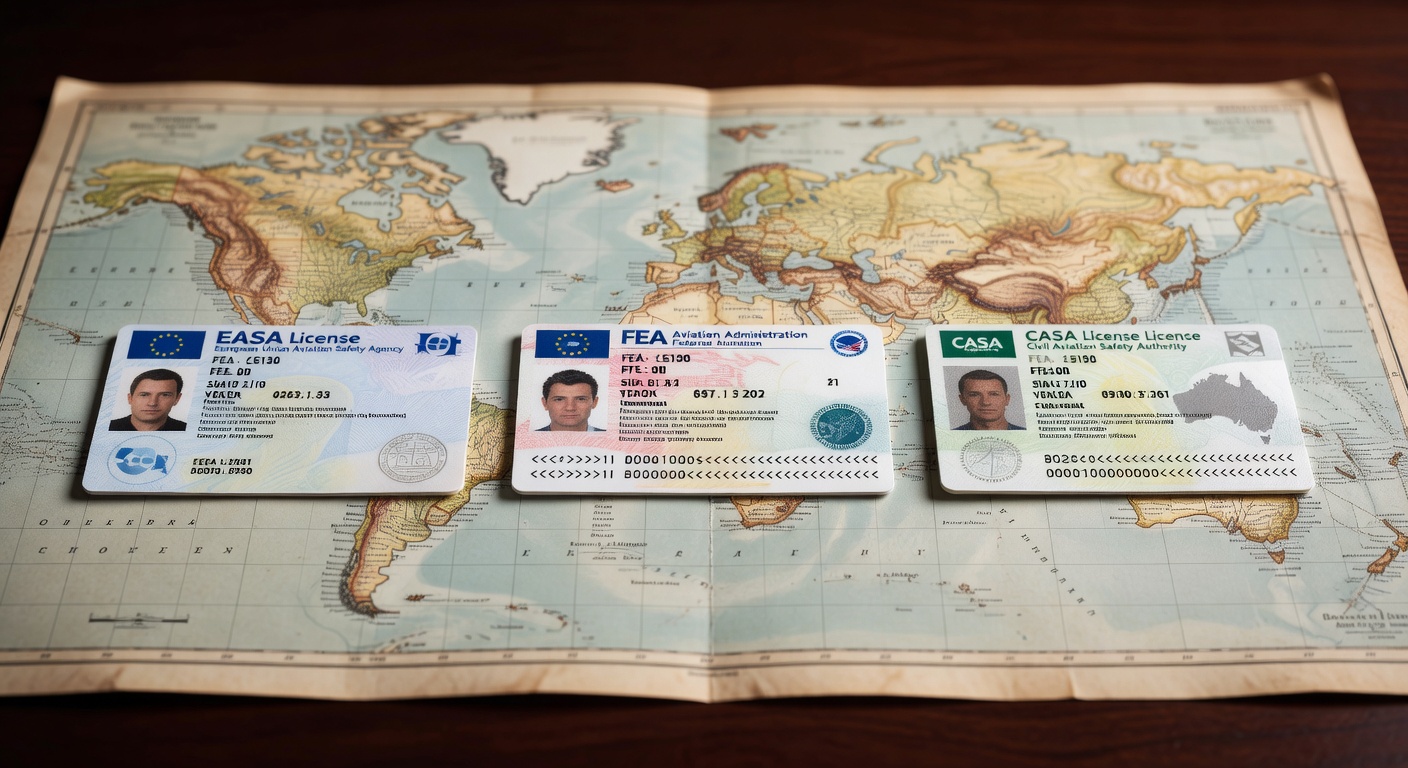
You must contact the issuing authority directly. EASA license verification runs through individual country CAAs (Civil Aviation Authorities). CASA has an online pilot verification tool. Transport Canada provides credential checks through TCCA.
US reciprocity agreements allow some credential acceptance, but the burden is on you to verify foreign certificates. ICAO (International Civil Aviation Organization) publishes guidance, but verification remains a manual process.
Ongoing Monitoring vs. One-Time Verification
Initial verification is step one. Ongoing monitoring is where most operators fail.
Part 135 operators should establish quarterly or semi-annual checks for certificate expirations, medical renewals, and enforcement actions. A pilot can receive a suspension or revocation between your initial hire date and their next scheduled flight.
An FAA certificate revocation takes effect immediately upon service — not on the date you discover it. If a pilot's certificate is revoked and you schedule them anyway, your operation shares liability.
Services like FlyCertify automate expiration tracking and alert you when medical certificates or ratings near expiration. Manual monitoring works for small operators, but anything beyond five pilots gets unwieldy fast.
What to Do if Credentials Expire or Are Revoked
Discovery happens one of two ways: during routine monitoring or during an FAA ramp check. The second is worse.
Ground the pilot immediately. Notify crew scheduling. If the certificate is suspended (temporary), the pilot must complete reinstatement requirements (retest, medical renewal, compliance program). If revoked (permanent loss), they start from zero — private pilot license and work up.
Employer liability kicks in if you schedule an expired pilot. The FAA treats it as knowingly operating with unqualified crew. Revocation versus suspension matters: suspension ends, revocation requires complete recertification.
Aviation Employer Verification Checklist
Before any pilot flies for your operation:
- ☐ Access FAA Airmen Inquiry — verify certificate type, ratings, and basic status
- ☐ Query PRD (Part 135/121/125 operators) or submit PRIA request (Part 91K)
- ☐ Verify medical class and expiration date
- ☐ Check type ratings against aircraft you operate
- ☐ Request logbook — verify currency (takeoffs/landings, instrument approaches, check rides)
- ☐ Run third-party background check (drug/alcohol consent, criminal history)
- ☐ Verify international credentials through issuing authority (if applicable)
- ☐ Establish ongoing monitoring schedule (quarterly minimum)
Keep documentation. The FAA audits verification records during certificate inspections.
Credential verification isn't a one-time checklist — it's an ongoing compliance requirement. Use PRD for Part 135+ operations, establish quarterly monitoring, and demand logbook proof of currency. The FAA doesn't accept "we didn't know" as a defense.
How do I check if someone is an FAA-certified pilot?
Use the FAA Airmen Inquiry system at FAA.gov. Search by name and certificate number. The system shows certificate type, ratings, and medical class. It won't show violations or currency — use PRD for deeper background checks.
What is the Pilot Records Database (PRD) and how do I access it?
PRD replaced PRIA in September 2024 for Part 135, 121, and 125 operators. It's a centralized database showing violations, accidents, and enforcement actions. Operators with Part 135+ certificates receive access credentials directly from the FAA.
Is PRIA still required for Part 135 operators?
No. PRD replaced PRIA for Part 135, 121, and 125 operators. PRIA remains available for Part 91K operations and historical record requests, but it's no longer the primary verification method for scheduled commercial operators.
Can I verify EASA or CASA pilot credentials through the FAA?
No. FAA systems only track US-issued certificates. Verify EASA credentials through the issuing country's CAA, CASA licenses through Australia's online portal, and TCCA certificates through Transport Canada directly.
What records must I check before hiring a pilot?
Certificate validity (Airmen Inquiry), violations and enforcement actions (PRD), medical class and expiration, type ratings, logbook currency, and drug/alcohol testing consent. For international pilots, verify credentials through the issuing authority.
Ready to Automate Pilot Credential Monitoring?
FlyCertify tracks expirations, alerts you to certificate actions, and keeps your operation compliant with Part 135 requirements.
See How It WorksFlyCertify Aviation Compliance Team
Our content is reviewed by aviation compliance professionals with Part 135, IS-BAO, and SMS implementation experience. We reference 14 CFR regulations, FAA Advisory Circulars, and ICAO standards to ensure accuracy. All regulatory citations are verified against current eCFR and FAA publications.
Related Credential Verification Articles
Part 91 vs Part 135: Key Differences
Understanding the operational, regulatory, and insurance differences between Part 91 private operations and Part 135 charter/air taxi operations.
SMS Aviation: Practical Guide for Operators
A practical walkthrough of implementing Safety Management Systems in business aviation — beyond the regulatory checkbox to genuine safety culture.
FAA Pilot Certificate Types Explained
From Student Pilot to Airline Transport Pilot — a comprehensive breakdown of every FAA pilot certificate, privileges, limitations, and requirements.
Ready to verify your credentials?
Join 21,700+ aviation professionals on FlyCertify.